What we lost when we stopped saving files
A short history of the save button, and what replaced it.

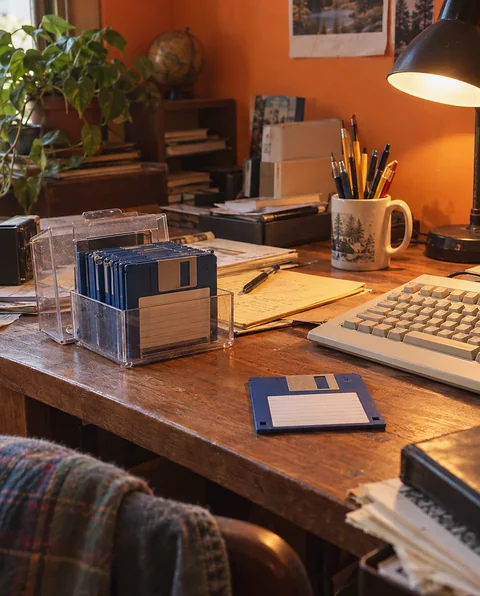
The save icon is still a floppy disk, a thing most people under twenty-five have never held. What disappeared with it was the habit of deciding what to keep.
Cloud storage saves everything automatically, which means it saves nothing on purpose. We spoke to archivists about what this means for the photographs and letters of the next fifty years.
Keeping everything is not the same as keeping anything.
The button that disappeared
For a generation, the floppy disk was what saving looked like. You pressed a button, a drive whirred, and a copy of your work now existed in one physical place you could hold, label and lose.
Then saving went quiet. Documents now save themselves, every few seconds, to a server most people never think about. It is safer, and in almost every way better.
What we lost
Something did go, though. Saving used to be a decision. You chose when a version was finished, what to call it and where to keep it. Old folders of files were a record of how work changed over time.
Automatic saving keeps everything and nothing. There is one live version, always changing, and the history is buried in a menu few people open.
Getting it back
A few habits help. Name versions when you reach a milestone, so you can find them later. Keep a local copy of things that matter, in a folder you organise yourself. And once a year, export the things you would hate to lose to a drive you can hold in your hand.