The chair that took eleven years
How a small Danish workshop spent a decade on one curve, and why it sold out in a week.

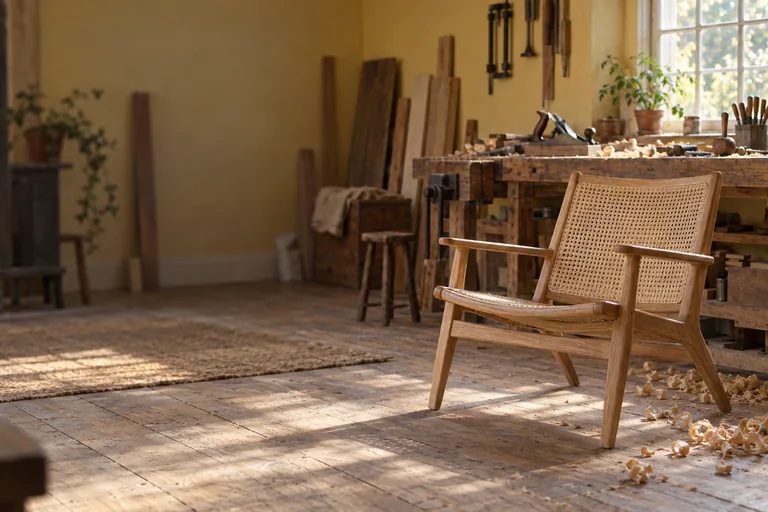
The first prototype was finished in 2015. The workshop made forty-one more before the arm felt right in the hand, and eleven years after the first drawing the chair went on sale in a run of two hundred.
We visited the workshop outside Aarhus to ask what changes between prototype nine and prototype forty-one, and why anyone would wait that long.
One curve, forty-one times
The workshop employs four people. Their lounge chair is ash, steam-bent in three pieces, with a hand-woven cane seat. The hard part, they say, was the arm: where your palm lands, how far it falls away, how it feels at the end of a long evening.
Each prototype was used at home for a month before the next was made. Prototype nine looked finished. Prototype twenty-three was the one that broke. Prototype forty-one is the one they sell.
Nobody notices the arm when it is right. Everybody notices when it is wrong.
Why it sold out
Two hundred chairs went on sale on a Tuesday morning and were gone by Friday. Most went to people who had followed the project for years through the workshop’s occasional newsletter, which is mostly photographs of wood drying.
What happens next
A second run of two hundred is planned for 2027. The workshop says there will be no third: they want to start the next chair, and they expect that one to take a while too.