Why we're buying film cameras again
A generation raised on infinite photos is paying for 36 at a time. We asked them why.

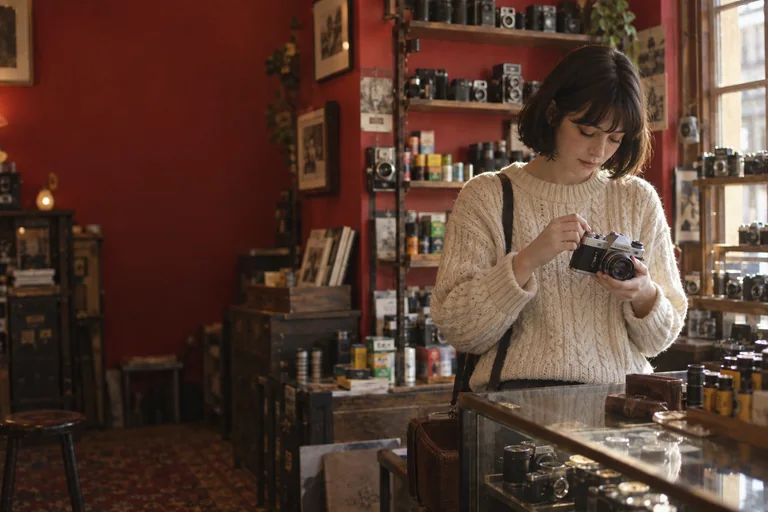
Second-hand camera shops in London report their busiest year since the early 2000s, and almost all of the new customers are under thirty. They are not nostalgic for something they never had. They are paying for limits.
Thirty-six frames, a week’s wait and no way to check the shot. We spent a month with six people who switched, and the most common reason they gave was that they finally look at their photos again.
The price of a frame
A roll of colour film now costs around fourteen pounds, and developing and scanning it costs about the same again. That works out at nearly eighty pence a picture, which changes how you hold the camera. “You stop taking the photo of the photo,” says Hana, a 26-year-old nurse who bought a 1970s rangefinder in March. “You wait for the thing to actually happen.”
Every person we spoke to described the same shift: fewer pictures, more thought before each one, and a strange new pleasure in not knowing how they came out.
You stop taking the photo of the photo. You wait for the thing to actually happen.
A week in the dark
The wait is the point. Labs in Hackney and Peckham say turnaround has stretched to ten days in summer, and nobody complains. Several of our six said the envelope of scans felt like post from their past selves.
There are costs beyond money. Film is unforgiving in low light, the cameras are old and need repairs, and a whole roll can be lost to a sticky shutter. But nobody we spoke to has gone back. Most still use their phones for receipts and parking spaces. The film camera is for the things they want to remember.
What to buy first
If you want to try it, start with a fixed-lens compact or a simple manual SLR and two rolls of 400-speed colour film. Shoot both rolls in a week, get them developed somewhere that returns your negatives, and look at the scans on a big screen. You will know quickly whether it is for you.